
Season’s refresh : A collection of exclusively curated handloom sarees | Shop Now

What Is Khadi? The Freedom Fabric, Explained
Most fabrics are made in factories. Khadi is made twice by hand — first when the cotton is spun into yarn on a charkha, and again when that yarn is woven into cloth on a handloom. No other everyday fabric in the world carries this double signature of human hands, and it is why khadi remains India’s most storied cloth.
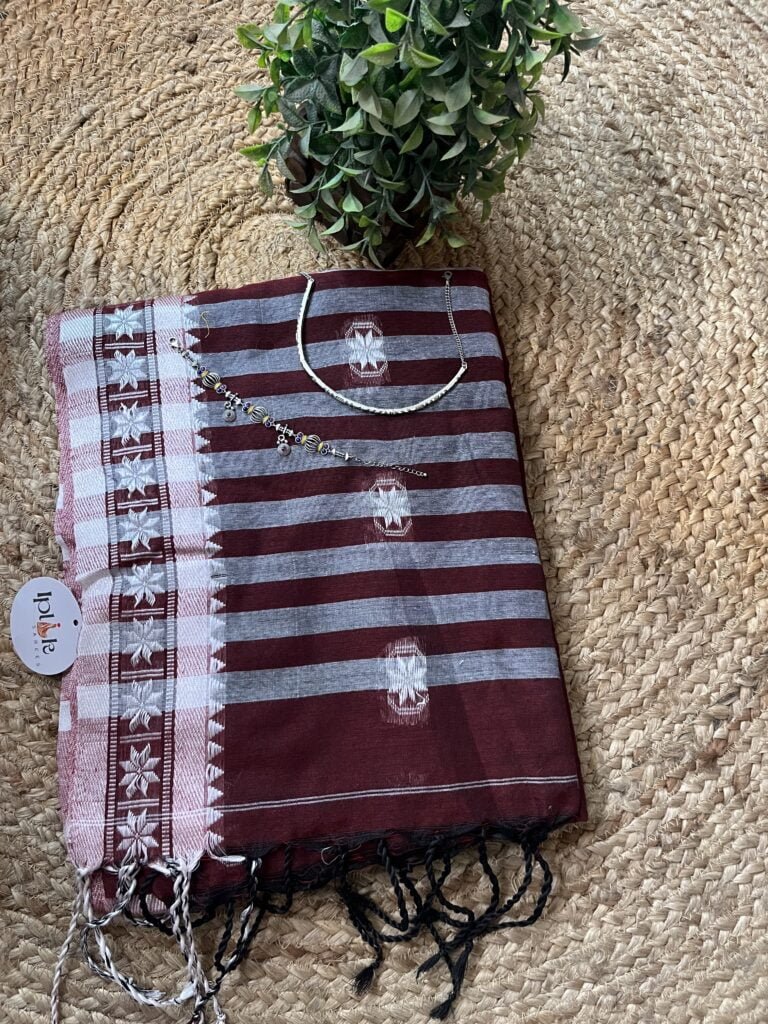
The fabric that carried a movement
In the 1920s, Mahatma Gandhi turned khadi from village cloth into a symbol of self-reliance — spinning your own yarn was an act of quiet defiance against imported mill fabric. That is how khadi earned its name as the freedom fabric. A century later, choosing khadi still means choosing local hands over distant machines: every metre supports a spinner and a weaver, not a factory line.
Why khadi feels different
Hand-spun yarn is never perfectly even — and that is precisely its magic. The tiny variations trap air between threads, which is why khadi famously keeps you cool in summer and warm in winter. It breathes better than mill cotton, absorbs sweat without clinging, and develops a soft, lived-in feel that improves with every wash. A khadi saree at year five is softer than it was on day one.
How to spot real khadi
- Look for texture: genuine khadi has a gentle, irregular grain — mill “khadi-look” fabric is suspiciously uniform.
- Feel the weight: real khadi is airy yet substantial, never plasticky or slick.
- Crush test: khadi creases honestly and springs back with a soft fall — synthetics resist creasing entirely.
- Ask the source: a genuine seller can tell you where the cloth was spun and woven.
The many faces of khadi
Khadi is a technique, not a single look. In our Khadi collection you will find plain weaves whose texture is the entire ornament, playful star-buti and matsya (fish) motifs from Bengal’s symbolic vocabulary, and Jharna khadi in soft two-tone palettes. Pieces like our Mekhla khadi on mercerised cotton and Assamese weave show how far the tradition stretches — from everyday minimalism to heirloom detail.
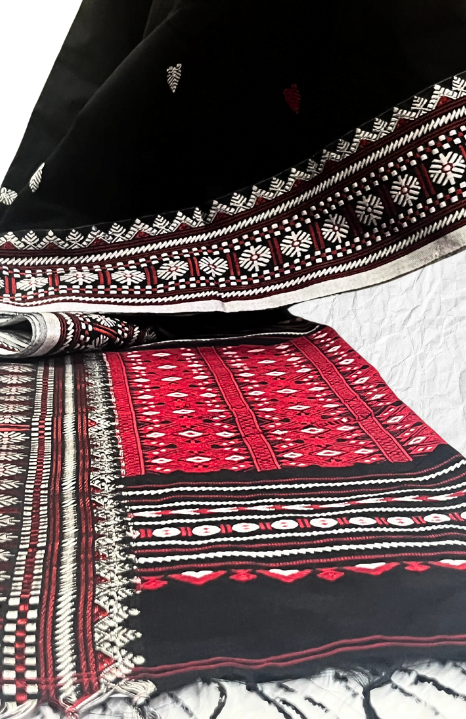
Styling the freedom fabric
Khadi rewards restraint. Wear it with simple silver, a plain blouse and open hair for work; add a bindi and oxidised jhumkas and it walks into an evening. In hot, humid months there is simply no better saree to spend twelve hours in — ask anyone who owns one.
Caring for khadi
Gentle hand-wash in cold water with a mild detergent, dry in shade, and iron while slightly damp. Avoid harsh machine cycles — hand-spun yarn deserves hand-level care. Stored well, khadi outlasts nearly everything else in your wardrobe.
Wear the cloth that made history
Every khadi saree at Label Iplik is spun and woven by hand — the same slow craft Gandhi championed, carried on by our family of 50+ weavers. Explore our Khadi sarees or browse all our handloom weaves — free shipping across India on every order.