
Season’s refresh : A collection of exclusively curated handloom sarees | Shop Now

Few fabrics carry as much history in their weave as Khadi. Hand-spun and hand-woven from natural fibres, Khadi is the cloth that helped clothe a movement and, decades later, still feels quietly luxurious against the skin. If you have ever wondered why a plain-looking Khadi saree costs more than a machine-made one, the answer lives in the many hours of human hands behind every single metre. This guide explains what Khadi really is, how it is made, why it feels the way it does, and how to wear and care for it so it lasts for years.
What Exactly Is Khadi?
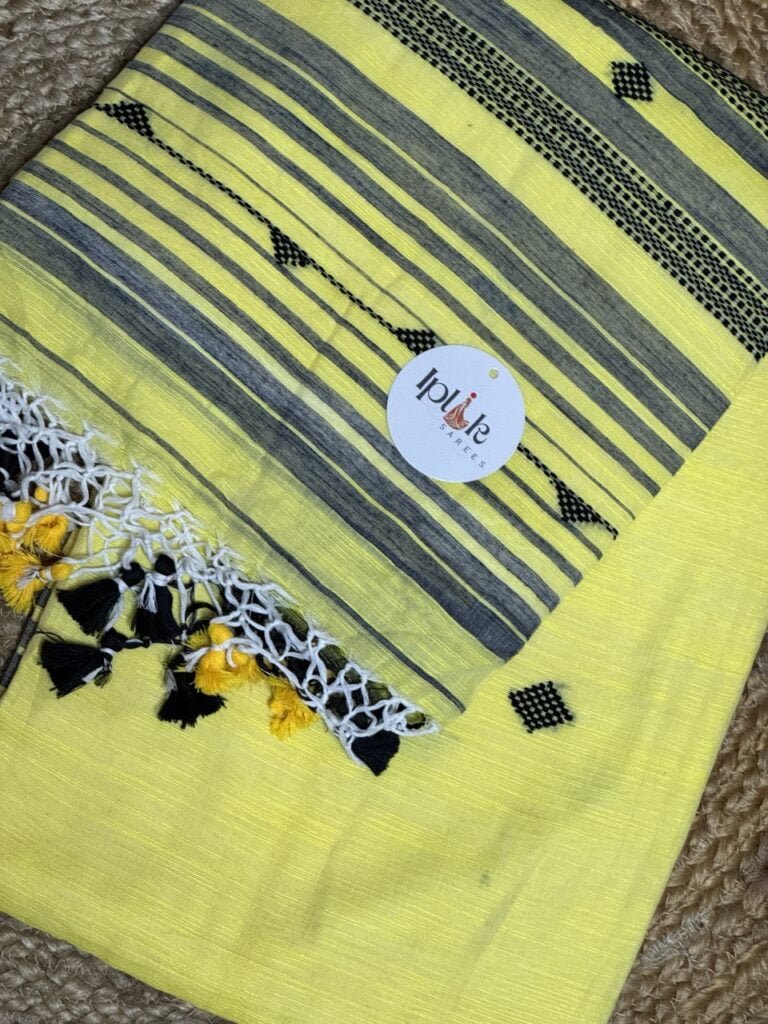
Khadi is any natural fibre — cotton, silk or wool — that is both spun into yarn by hand on a charkha (spinning wheel) and then woven by hand on a loom. That double handwork is the definition. It is not a print or a pattern; it is a method. Because the yarn is spun by hand, no two threads are perfectly identical, which gives Khadi its signature soft irregularity, its gentle texture, and a breathable, airy drape that mill-made cloth simply cannot copy. When people say Khadi “breathes,” this hand-spun looseness is exactly what they mean.
Khadi and India’s Freedom Story
During India’s independence movement, Khadi became far more than cloth. Mahatma Gandhi championed hand-spinning as a way for ordinary people to reclaim their economic independence from imported mill fabric. Wearing Khadi was a quiet act of self-reliance, and the charkha even found its way onto the flag of the freedom struggle. That is why Khadi is often called the freedom fabric. The heritage is still protected today: genuine Khadi carries certification, and buying it continues to put income directly into the hands of rural spinners and weavers rather than large factories.
How Khadi Is Made
The journey from fibre to saree is slow and deliberate. Raw cotton is cleaned and carded into soft rolls called punis, then spun thread by thread on the charkha. The spun yarn is sized to give it strength, dyed if colour is needed, and mounted onto a handloom, where the weaver interlaces warp and weft entirely by hand. A single saree can take several days of continuous, skilled work. That is why Khadi is best understood not as a bargain but as an heirloom — something you buy once and keep, rather than replace every season.
Why Khadi Feels Different
People who switch to Khadi rarely go back, and there are practical reasons for that:
- Breathable in every season — the loose hand-spun weave keeps you cool in summer and surprisingly warm in winter.
- Gentle on skin — minimal chemical processing makes it kind to sensitive and reactive skin.
- Ages beautifully — Khadi softens with every wash instead of wearing out.
- Low impact — hand-spinning uses no electricity, so the fabric has a tiny environmental footprint.
- Truly unique — slight slubs and variations mean your drape is genuinely one of a kind.
These qualities are why Khadi has quietly returned to fashion, worn now by people who want clothing with a conscience as well as a story.
How to Style a Khadi Saree
Khadi rewards understated styling. Its matte, textured surface pairs beautifully with oxidised silver jewellery, terracotta or wooden accessories, and a simple bindi. For daywear, a crisp cotton blouse and a minimal drape keeps the look effortless and office-ready; for evenings, add a rich contrast border, a statement neckpiece and a bold lip. Khadi also layers well — try it with a handloom jacket, or pair a Khadi drape with coordinated handloom suits for a relaxed festive ensemble. If you love the earthy texture, you will feel right at home in our cotton handloom range too.
Caring for Your Khadi
Khadi is hardy but appreciates a little care. Hand-wash the first few times in cold water with a mild detergent, avoid wringing it hard, and dry in shade to protect the colours. A light steam or a medium-heat iron while the fabric is slightly damp brings back its crisp fall. Store it folded with a little breathing room rather than crushed in a tight pile. Treated gently, a good Khadi saree only grows softer, more supple and more personal with age.
Ready to feel the difference for yourself? Explore our handwoven Khadi collection, woven by our family of 50+ weavers, and browse the wider edit of handloom sarees — with free shipping across India, your next heirloom is only a click away.